Use Autobiographical Memory to Fight the Mental Health Crisis
Autobiographical Memory
One of Mom & Dad's Secret Weapons in Fighting the Mental Health Crisis

Definition #1:
Here are the parts of the brain strengthened by having a strong autobiographical memory.
- Hippocampus (episodic memory & time)
- Medial Prefrontal Cortex (self, meaning, values)
- Posterior Cingulate Cortex (integration & continuity)
- Lateral Temporal Cortex (meaning & semantic memory)
- Amygdala (emotional salience — regulated, not amplified)
So what?
Better function in these areas support better mental health. (You can expect improved emotional regulation, resilience, and lower risk of internalizing disorders.)
You can improve:
- Identity formation
- Moral reasoning
- Emotional regulation
- Long-term goal orientation (aiming up)
Even if you are like me and you aren't a science person, you have to admit that giving your kid all of that sounds pretty good. Right?
There is a caveat here. A big one.
Success hinges on parents actively and intentionally building narrative that supports autobiographical memory.
When you build narrative properly your kid's brain will light up.
The hippocampus will ??? reactive episodic memory (time, place, context), the medial prefrontal cortex will link memory to self and values and the amygdala will tag emotion. All of that equals memory reconsolidation.
Definition #2
Memory reconsolidation allows previously stored memories to be updated, emotionally reframed, and integrated into an evolving sense of identity. This is a strong process that makes your kids into who they are - who they will be in adulthood.
What an important thing for a parent to be intentional about!
Cool - but how do I do that? What do I need to do to help my kid have all that?
So glad you asked...
HOW?
There are a number of ways to build narrative.
And my goal is to teach parents as many of these strategies as possible to help them find ones that work best for their family.
Let's talk about one.
Using Art | Photo and video to build narrative.
I've always loved photography. I took classes in high school, again in college. I worked at studio in Milwaukee for a decade doing weddings, portraits, corporate headshots and videos. I loved the stories that came with each shoot. The art of it is in those stories. It was always more than "a few snaps of a camera" for me.
In 2021, I moved from Milwaukee with my family to the Fox Valley. I considered opening my own studio but there are approximately a billion "photographers" and they all seemed to be competing to be the lowest common denominator. Mini-sessions. Fastest. Less cost. I was uninterested in playing in that particular sandbox. It felt so cheap. I wanted the art to mean something. If I put something on my wall, I wanted it to be art that tagged something deeper in my kids. Memory. Values. Our story. I wasn't sure what it was, but I knew there was something there. This is how narrative was born. I spent years researching, digging, looking for the answers.
After all that, I'm happy to report that yes, you can use photo and video as a weapon against the mental health crisis that plagues our culture. By intentionally and actively using these tools, you can build up your child's autobiographical memory and get all the benefits that come along with that.
Intentionally and Actively
We need to help our kids recall details, label and narrate values.
And we need to revisit it across time.
Ideally 2-3 times a week for 5-10 minutes.
You can do more but you don't need to invest hours a day into it. (It turns out pressure and stress squash some of the benefit.)
(Isn't that great news? We don't have a huge, high bar to get over. It's about small moments of intentionality to speak to who your kids are and who they will become.)
What does that really mean?
That can be in the form of photos on you wall (I'm a big fan of collages - multiple images hung in a group.)
It can be a small photo book.
Or a short video.
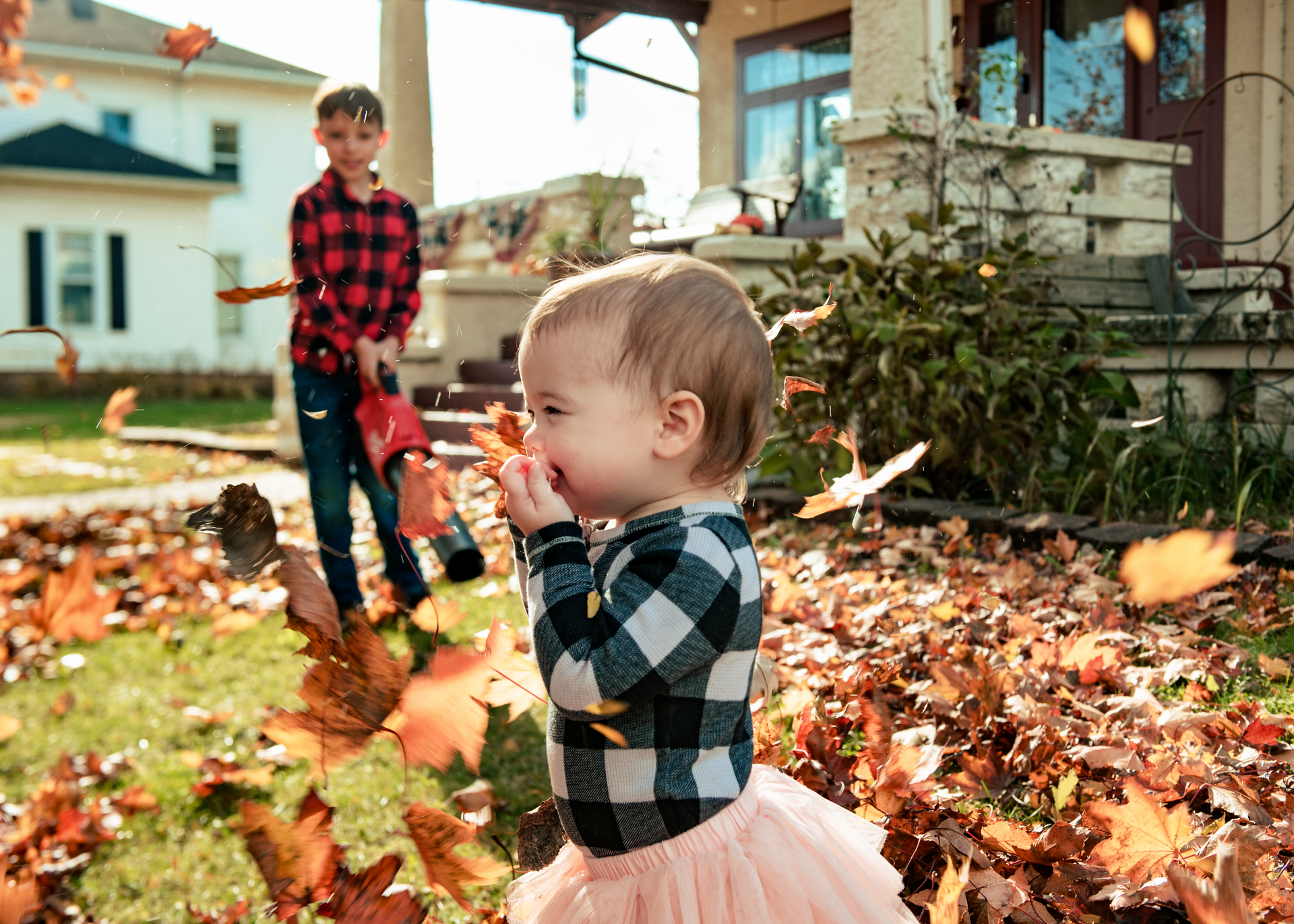
Format doesn't really matter as long as the content is authentic. That means, it's your kid actually doing something real. You really cooking breakfast together and sitting down as a family to eat. Actually sitting at their desk to do homework or actually snuggled up with you reading a book. That's why I shoot the way I do.
Then, as you look at the art together, you label and narrate values. Talk. Discuss the values you want to reinforce that are demonstrated in what you are looking at.
Doing narrative reflection which means saying things like "Look - this is you when you focus." Hone in on statements that reinforce self-efficacy and solidify that trait in their identity.
These little acts of building narrative can have huge benefits...
Benefits in Children
• Accelerates autobiographical memory development (by the way - people who tend to have stronger, specific autobiographical memories are less likely to be depressed.)
• Strengthens identity
• Improves emotional regulation and attention
• Builds family narrative that predicts resilience into adulthood
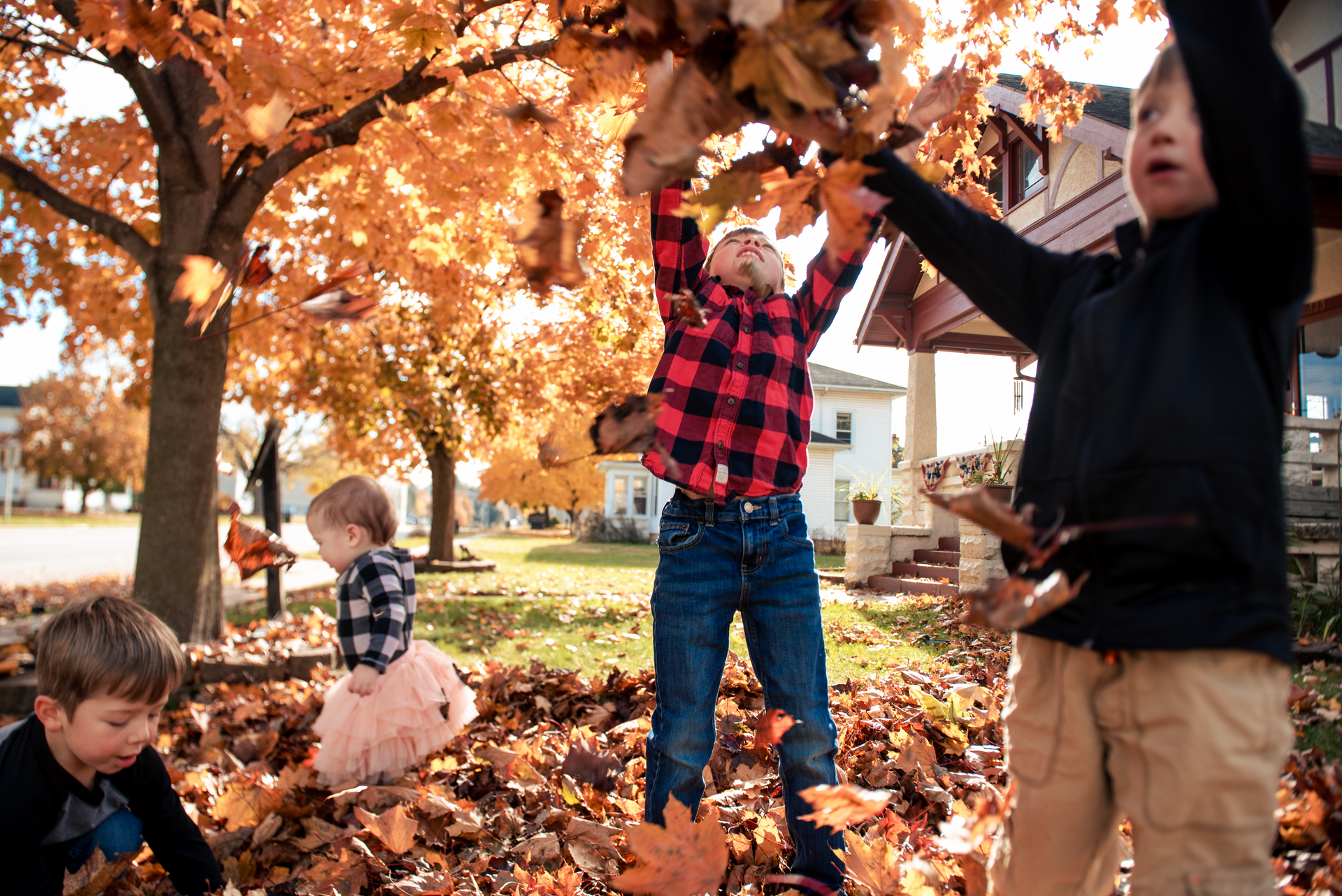
Identity-based Neural Shaping
I believe parents can use this same method to strengthen specific traits - maybe something they see their kid struggle with can be helped immensely with this strategy.
Let's do an example.
Say you are dealing with a kid who has been diagnosed with ADHD...
(Remember I have three little boys. If I wanted to, I could walk into any doctors office tomorrow and get all of them diagnosed and medicated in very short order. I know what it's like, not just to raise, but to homeschool, very energetic and unfocused children. But I use story instead of therapy and meds.)
But first... a little more science (groan I know, I'll try to make it not boring.)
When the brain is more plastic, when it has more plasticity, it has more ability to learn. Plasticity is super important.
There are two systems in the brain that handle plasticity and learning - dopamine and acetylcholine (ACh).
Super cool fact - kids have a lot more ACh than adults.
This is because they are not yet developed enough to know what to pay attention to in order to learn.
So they pay attention to everything.
Of course, that means their focused attention stinks.
That is not a bug. It's a feature. It's how kids are designed. They need that big, wide web of plasticity to jam pack as much learning into a short time (childhood) as possible. Later, as their brain develops, their ACh levels will drop and their ability to give focused attention to important things will grow until they reach adulthood.
It turns out ACh is hugely important in building autobiographical memory.
Interestingly, plasticity and learning are also enhanced by novelty - doing something you don't normally do. So special experiences like a photo shoot or family field trips or vacations are great times to reinforce your family narrative.
Side note: If someone has told you that your kid is broken because they can't sit still and pay attention in school for hours on end, that person was wrong. Your kid is not broken. That is a very common wrong story that actually fuels the mental health crisis. Kids diagnosed with ADHD have significantly higher rates of other mental health issues. That's not from disease - it's from story. Remember, their ACh system is working just as it should.
As they grow and learn how to prioritize information and focus on the important things, they will get better at focused attention. Of course, there are people who are naturally more energetic - but we need them people like that to run into burning buildings and save people sometimes. So my humble opinion is that we should not pathologize and diagnose those people as being disordered.
Who decided what the correct amount of attention is to have anyway? Deficit means the amount by which something is too small.
But they don't even have a measure for attention - so how is it that they can say so many people have a deficit?
Enhancing attention with narrative
We want to enhance the trait of attention. So we can focus in on photos and/or video of the child demonstrating focused attention on something.
When we do that, we do three things in the brain:
- Experience-dependent plasticity
- Self-referential learning
- Behavior shaping through reconsolidation (remember we talked about this before)
Parents then can reasonably expect:
- Increased plasticity of attention-related circuits
- Improved self-regulation
- Stable positive behavior
None of this changes personality. And it shouldn't.
With my boys we often attend to images of them focusing. I show them videos of themselves doing hard things, focusing and winning. We couple this with discussing our legacy. We have studied our family tree and incorporate discussions of how they come from people who have done hard things. so they can do hard things too. Using these strategies I don't get magically and perfectly silent and still boys - but their focus does improve and we can get through what we need to. They are learning over time that they have the agency to handle hard, even boring, tasks and can succeed in them.
Their hippocampus says "This is something I do"
Their medical prefrontal cortex integrates that into their identity
Their posterior cingulate cortex brings in continuity saying "This is who I am across time"
These skills are more plastic (and more deeply engrained) than any that are tied to reward/consequence. It's the best of all worlds because I don't have to stress on bribing or punishing, pulling them along or worry too much about outcome. Actually this is critical to success. (And our relationship.)
But conditions have to be right...
This all works only if the parent is in the right state and the experience is real.
It needs to be:
- Authentic
- Your words should be descriptive - not evaluative. Praise or correction actually don't help all that much. You are pointing out what you see. Narrating.
- You need to be recognizing the good you see - not pressuring, stressing or expecting too much too fast. They will pick up on the stress and learning systems shut down.
- Repetitive - you don't have to commit to a ton of time each time, but you do need to commit to building narrative over the long haul. Keep speaking into who they are or someone else will pick up the slack. The chances they come in with the wrong narrative is extremely high.
All of this is best done by parents. "Experts" not required.
This is huge.
Today we are told over and over as parents that we need experts to help us navigate parenthood.
We need an army to get through their childhood with success - therapists, psychologists, psychiatrists, doctors, coaches, teachers, counselors...
But it turns out that neurosciences says kids learn best when they feel safe. And kids feel most safe with their parents.
So they will learn best from you. (There's one more point going to homeschool.)
Parents should be the primary mirror of identity for their children. It will never work as well when it's someone else. Even if they eventually get more comfortable with another adult, they will never be as comfortable, as safe, as they are with you. You are home for a reason and their brain chemistry is tied to you. For good or bad.
When kids spend time with their parents in meaningful ways, their brain actually releases oxytocin. This leads to more memory reconsolidation. Remember that from before?
This effect is strongest and most reliable in secure parent-child relationships. Which means time spent with "experts" isn't as valuable as you might think, and definitely not as valuable as time spent with you. Even if they are "experts". Whatever that means.
So your belief in yourself to do this and do it well is key to the whole thing working well. It's called Parental Self-Efficacy. It's the belief that you’ve got what it takes to shape your child’s growth, behavior, and well-being through confident, intentional, and authoritative parenting.
It's the story you tell yourself about parenting and it contributes greatly to your child's mental health. This is where my convictions move beyond science into the realm of values, morality and story.
It really is all about story from beginning to end.
So you see, it really is about story from beginning to end. It starts with you. And a lot of it depends on you.
The more you intentionally put into shaping the narrative your child lives by, the more they will internalize those values into their identity. People with know what their values are, what their roles are and where their place is (that they belong and are needed) are much less likely to develop mental illness. They are much less likely to fall victim to people who prey on children to gain money, power or status.
I don't know about you, but I want my kids to be equipped like that. So we build narrative. Imperfectly. But it's better than letting someone else do it. And make no mistake - if you neglect this important aspect of your child's formation, someone else will snatch up the opportunity. The chances that they capitalize on it by telling the wrong stories is incredibly high. Compliant, unthinking, medicated and foggy people are easy to manipulate, to control. To make into victims. To convince they are helpless and hopeless.
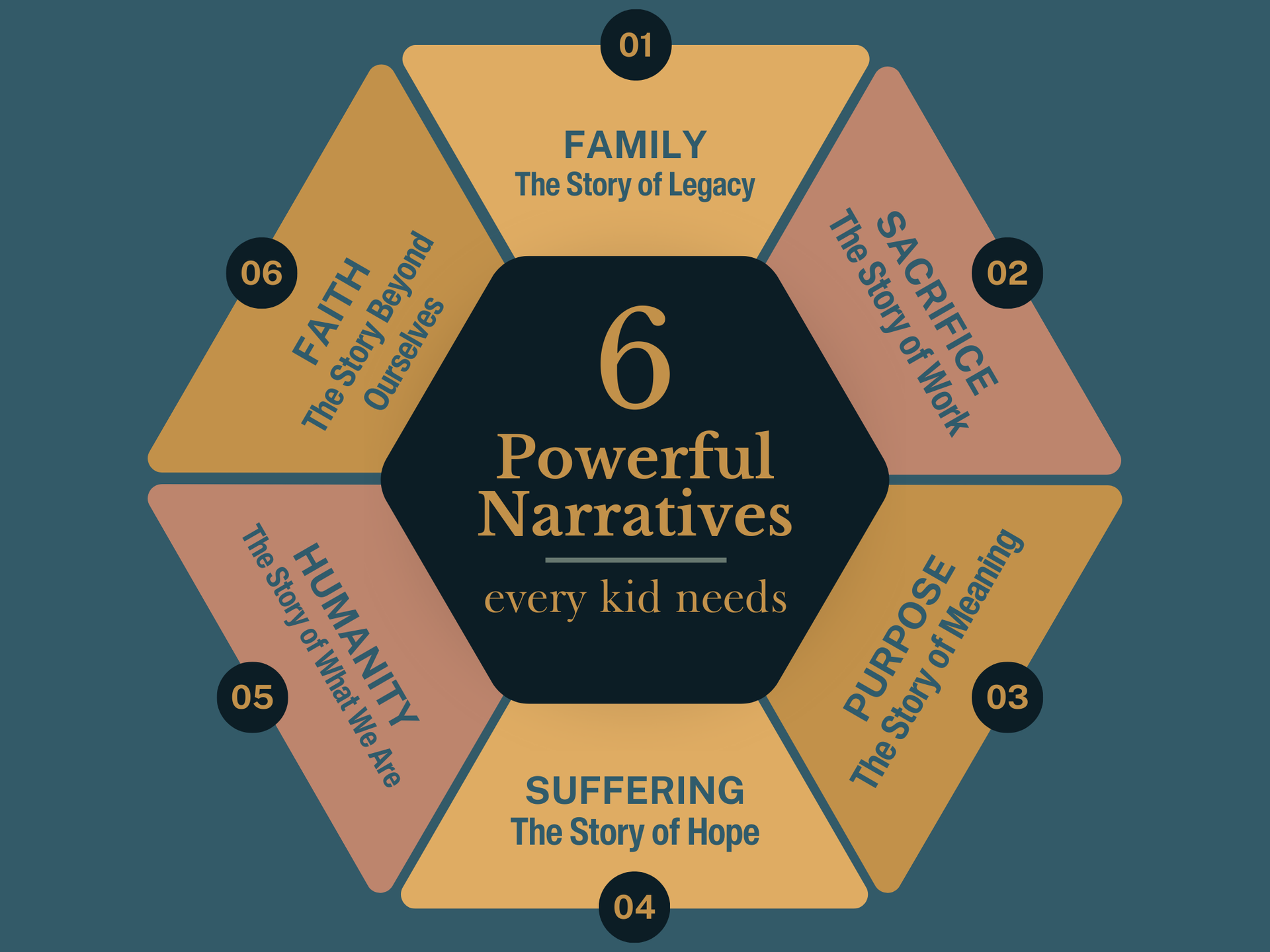
Kids who grow up under the 6 powerful narratives every kid needs? They are resilient. And they grow to be resilient adults too.
So I hope you will keep following along as I teach more about narrative and give out more tools for parents to use this strategy to raise resilient kids. Thanks for hanging in for so long (even through the science-speak). You are already proving that your parental self-efficacy is off the charts.
Questions? Comments?
If you have any questions about building narrative, please reach out.
For the latest in narrative education, tools and resources, follow us on our socials.
Citations:
Autobiographical Memory & Identity Formation
1. Conway, M. A., & Pleydell-Pearce, C. W. (2000). The construction of autobiographical memories in the self-memory system. Psychological Review, 107(2), 261–288.
→ Foundational paper establishing autobiographical memory as central to identity, self-concept, and meaning-making.
2. McAdams, D. P. (2001). The psychology of life stories. Review of General Psychology, 5(2), 100–122.
→ Demonstrates how narrative identity integrates autobiographical memory into personality and moral development.
3. Fivush, R., Habermas, T., Waters, T. E. A., & Zaman, W. (2011). The making of autobiographical memory: Intersections of culture, narrative, and identity. International Journal of Psychology, 46(5), 321–345.
→ Strong support for parent-child narrative scaffolding shaping autobiographical memory and identity.
Brain Networks Involved in Autobiographical Memory
4. Svoboda, E., McKinnon, M. C., & Levine, B. (2006). The functional neuroanatomy of autobiographical memory: A meta-analysis. Neuropsychologia, 44(12), 2189–2208.
→ Confirms hippocampus, medial prefrontal cortex, posterior cingulate cortex, temporal cortex, and amygdala involvement.
5. Northoff, G., et al. (2006). Self-referential processing in our brain—A meta-analysis of imaging studies. NeuroImage, 31(1), 440–457.
→ Supports the role of the medial prefrontal cortex in self, values, and identity integration.
Emotional Regulation & Mental Health Outcomes
6. Williams, J. M. G., et al. (2007). Autobiographical memory specificity and emotional disorder. Psychological Bulletin, 133(1), 122–148.
→ Strong evidence that overgeneral autobiographical memory is associated with depression and PTSD, while specificity is protective.
7. Hallford, D. J., et al. (2018). The association between autobiographical memory specificity and mental health. Clinical Psychology Review, 60, 88–103.
→ Reviews evidence linking autobiographical memory specificity with resilience and reduced depressive symptoms.
Memory Reconsolidation & Identity Updating
8. Nader, K., & Hardt, O. (2009). A single standard for memory: The case for reconsolidation. Nature Reviews Neuroscience, 10, 224–234.
→ Establishes reconsolidation as a process by which reactivated memories are updated and integrated.
9. Lane, R. D., et al. (2015). Memory reconsolidation, emotional arousal, and the process of change in psychotherapy. Behavioral and Brain Sciences, 38, e1.
→ Shows reconsolidation as a mechanism for emotional updating and identity-level change.
Acetylcholine, Plasticity, and Learning in Children
10. Hasselmo, M. E. (2006). The role of acetylcholine in learning and memory. Current Opinion in Neurobiology, 16(6), 710–715.
→ Key paper explaining how acetylcholine supports attention, plasticity, and memory encoding.
11. Gu, Q. (2002). Neuromodulatory transmitter systems in the cortex and their role in cortical plasticity. Neuroscience, 111(4), 815–835.
→ Supports claims about ACh-dependent plasticity and learning.
12. Rueda, M. R., et al. (2005). Development of attentional networks in childhood. Neuropsychologia, 43(7), 1029–1040.
→ Shows that children’s attentional systems are developmentally broad and become more focused with maturation.
Novelty, Experience-Dependent Plasticity, and Memory
13. Lisman, J. E., & Grace, A. A. (2005). The hippocampal-VTA loop: Controlling the entry of information into long-term memory. Neuron, 46(5), 703–713.
→ Explains why novelty enhances learning and memory consolidation.
14. Kolb, B., & Gibb, R. (2011). Brain plasticity and behaviour in the developing brain. Journal of the Canadian Academy of Child and Adolescent Psychiatry, 20(4), 265–276.
→ Strong support for experience-dependent plasticity during childhood.
Parent–Child Narrative & Autobiographical Memory Development
15. Fivush, R., & Reese, E. (2002). Reminiscing and relating: The development of autobiographical memory. Applied Cognitive Psychology, 16, 573–590.
→ Demonstrates how parents shape autobiographical memory through guided narration and reflection.
16. Reese, E., et al. (2010). Maternal elaborative reminiscing increases children’s autobiographical memory and narrative skills. Journal of Cognition and Development, 11(4), 373–400.
→ Direct evidence that intentional parental narrative improves memory development.
Oxytocin, Safety, and Learning
17. Feldman, R. (2012). Oxytocin and social affiliation in humans. Hormones and Behavior, 61(3), 380–391.
→ Supports oxytocin release during parent-child bonding and its role in emotional regulation.
18. Porges, S. W. (2011). The polyvagal theory. Norton.
→ Establishes safety as foundational for learning and neural integration.
Parental Self-Efficacy & Child Outcomes
19. Bandura, A. (1997). Self-efficacy: The exercise of control. W.H. Freeman.
→ Foundational theory behind parental self-efficacy.
20. Jones, T. L., & Prinz, R. J. (2005). Potential roles of parental self-efficacy in parent and child adjustment. Clinical Psychology Review, 25(3), 341–363.
→ Shows parental self-efficacy predicts better emotional and behavioral outcomes in children.
Read more